
Guide · 5 min read
The Best Window Treatments for Bay Windows
How to dress a bay window well, including pole vs track, per-pane vs full-span options, and the products that work best around the angles.
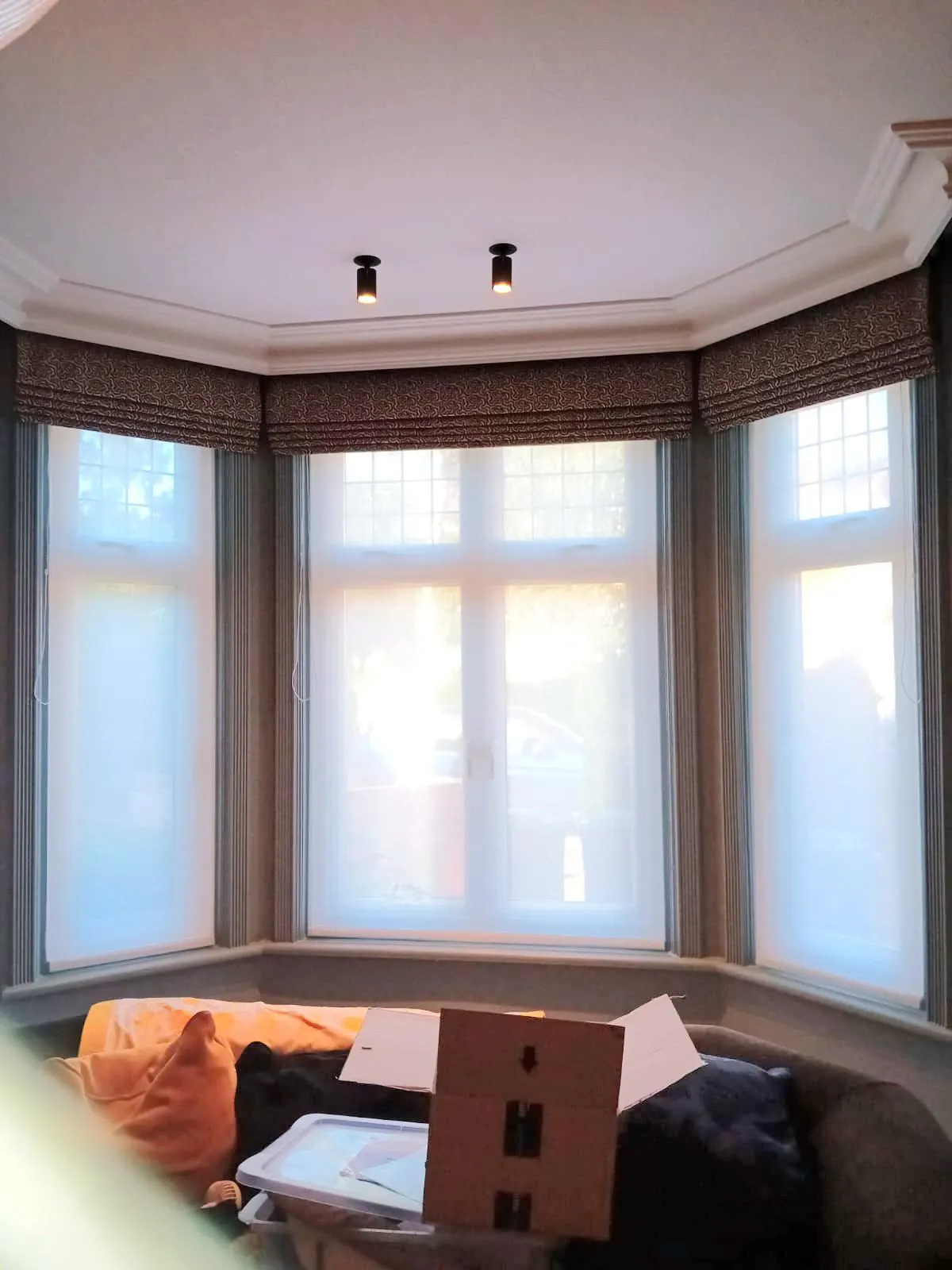
Bay windows are one of the loveliest architectural features in London’s Victorian and Edwardian homes, but they’re also one of the trickiest to dress well. The angles, the number of separate panes, and the depth of the recess all affect what will actually work.
Curtains: full-span or per-pane?
A bent track that follows the full curve of the bay lets you draw one set of curtains fully across all panes in one motion — the most practical option, and the one that gives the fullest, most generous curtain effect when open (the fabric stacks neatly into the corners rather than across the window). A pole can be used for a bay but needs jointed sections at each angle, which some people love for the traditional look and others find visually busy.
Alternatively, dressing each pane separately with its own shorter curtains or blinds keeps the architecture of the bay clearly visible and can suit a smaller bay better, though you lose the single sweeping-curtain effect.
Blinds in a bay
Blinds are almost always fitted per pane in a bay, recess-fitted into each individual window section. This gives you independent control of light and privacy on each pane — useful if one side of the bay gets more direct sun — and a neat, made-to-measure fit that follows the true shape of each recess.
Shutters
Bay windows are arguably where shutters look their best. Made to measure for each pane and angle, they give the bay a solid, architectural, built-in quality that’s hard to achieve with fabric alone, and tiered (café-style) shutters let you keep the top half open for light while keeping the bottom private — ideal for a ground-floor bay facing the street.
Combining products
A popular approach for bays is blinds or shutters fitted into each pane for everyday light and privacy control, with curtains on a bent track around the whole bay for warmth, softness, and drawing fully closed at night. It costs more than a single product, but it’s the combination that gives the most flexibility and, in our experience, the best-finished look for a feature bay window.
Getting the measure right
Bay windows are rarely symmetrical — the angles and pane widths often vary slightly from one side to the other, especially in older properties. This is one case where we’d always recommend a proper site survey rather than relying on a DIY measure, since getting a bent track or multiple shutter panels to align well depends on precise, on-site measurements. Our window measuring guidecovers the general principles, though a bay is exactly the case where we’d do the final measure ourselves.
See our blinds & shutters range and our curtains range for more.
Ready to talk through your windows?
Book a free design consultation and we’ll help you choose the right made-to-measure blinds, curtains or shutters for your home.
Get in touch