
Guide · 4 min read
The Full Cost of Motorised Blinds and Curtains
What actually drives the cost of motorising blinds or a curtain track — battery vs mains, per-window pricing, and where it's worth the extra spend.
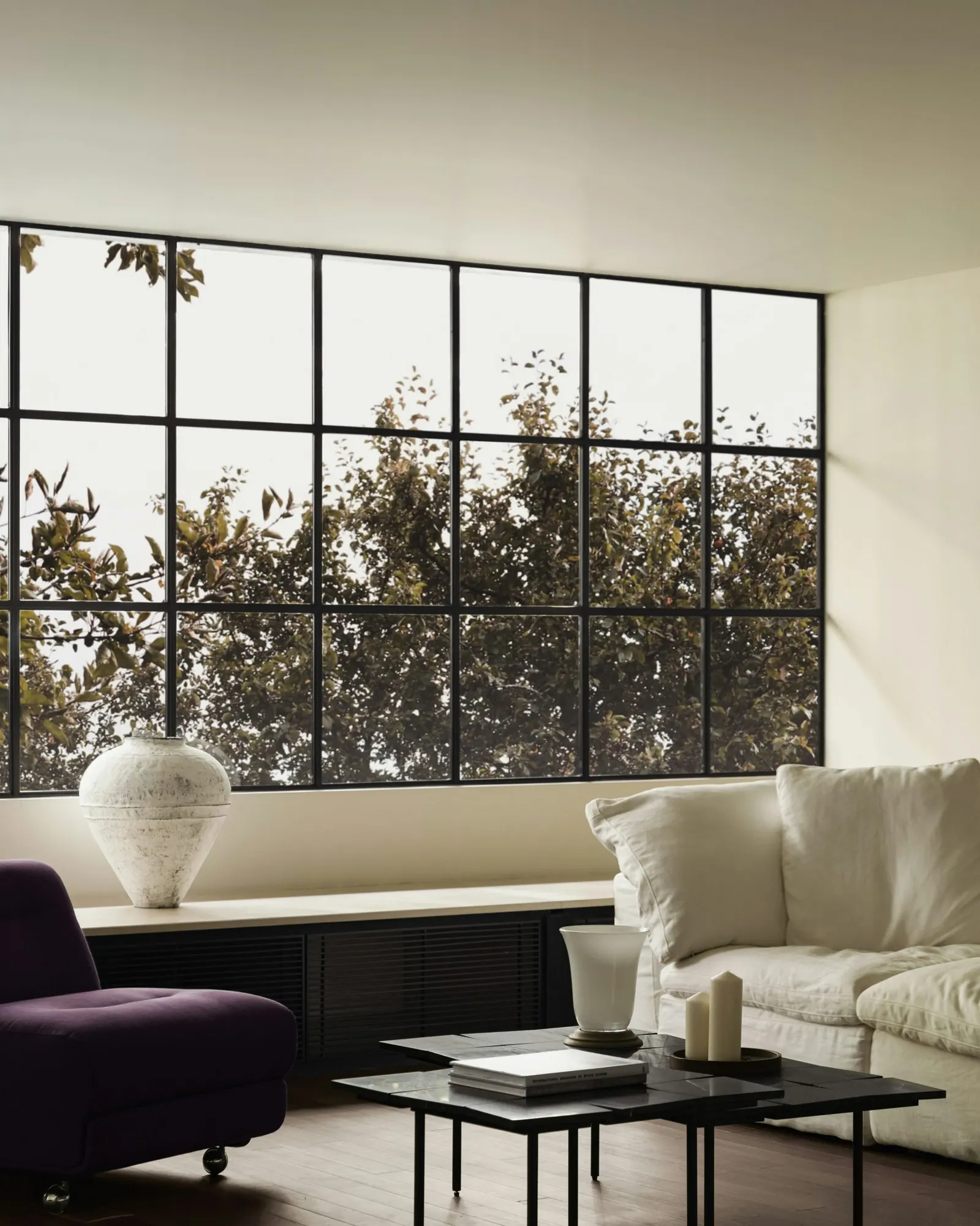
Motorisation is priced per window rather than as a flat add-on to a whole order, which makes it hard to estimate without understanding what actually drives the cost. Here’s what to budget for.
The motor itself
This is the main additional cost, and it varies by the type of motor and the weight and size of blind or curtain it needs to move. A motor for a single, modestly sized roller blind costs less than one rated for a wide, heavy curtain track spanning a large bay window, simply because more powerful motors and more robust components are needed to move more weight smoothly and quietly.
Battery vs mains-wired
Rechargeable battery motors have become the more popular option for most homes, since they avoid the need for an electrician or any wiring work — genuinely useful for a retrofit onto existing windows. Mains-wired motors cost less per unit but need an electrician to run power to each window, which adds to the overall cost of the job, particularly if cabling needs to be chased into walls in a finished room. For a straightforward retrofit, battery motors usually work out more cost-effective once electrician time is factored in.
Control systems
A basic remote control is the simplest and least expensive way to control a motorised blind or curtain. Smart home integration — app control, voice control, scheduling, grouping multiple windows into scenes — typically requires a compatible hub or bridge, which is usually a one-off cost that can then control every motorised window in the home, rather than a per-window cost.
Per-window vs whole-house motorisation
Motorising every window in a home adds up quickly, which is why most customers motorise selectively — skylights, large or heavy curtains, and windows that are awkward to reach, while leaving easily reached standard windows manual. This targeted approach captures most of the practical benefit at a fraction of the cost of motorising everything. See our guide to motorised blinds and curtains for where it makes the most practical difference.
Ongoing costs
Battery motors need periodic recharging (typically every few months depending on use, similar to charging a phone) but have no ongoing electricity cost beyond that. Mains-wired motors draw negligible power. Neither type carries a meaningful running cost — the investment is almost entirely upfront.
Is it worth it?
For hard-to-reach windows and heavy curtain tracks, motorisation often pays for itself in convenience alone. For an easily reached standard window, it’s a genuine luxury upgrade rather than a practical necessity — worth discussing at your consultation once you have a real quote for your specific windows, rather than deciding in the abstract.
See our blinds & shutters range and our curtains range for more.
Ready to talk through your windows?
Book a free design consultation and we’ll help you choose the right made-to-measure blinds, curtains or shutters for your home.
Get in touch