
Guide · 5 min read
How to Choose the Right Curtain Lining
Blackout, thermal, interlining or standard cotton sateen — what each curtain lining actually does and how to pick the right one.
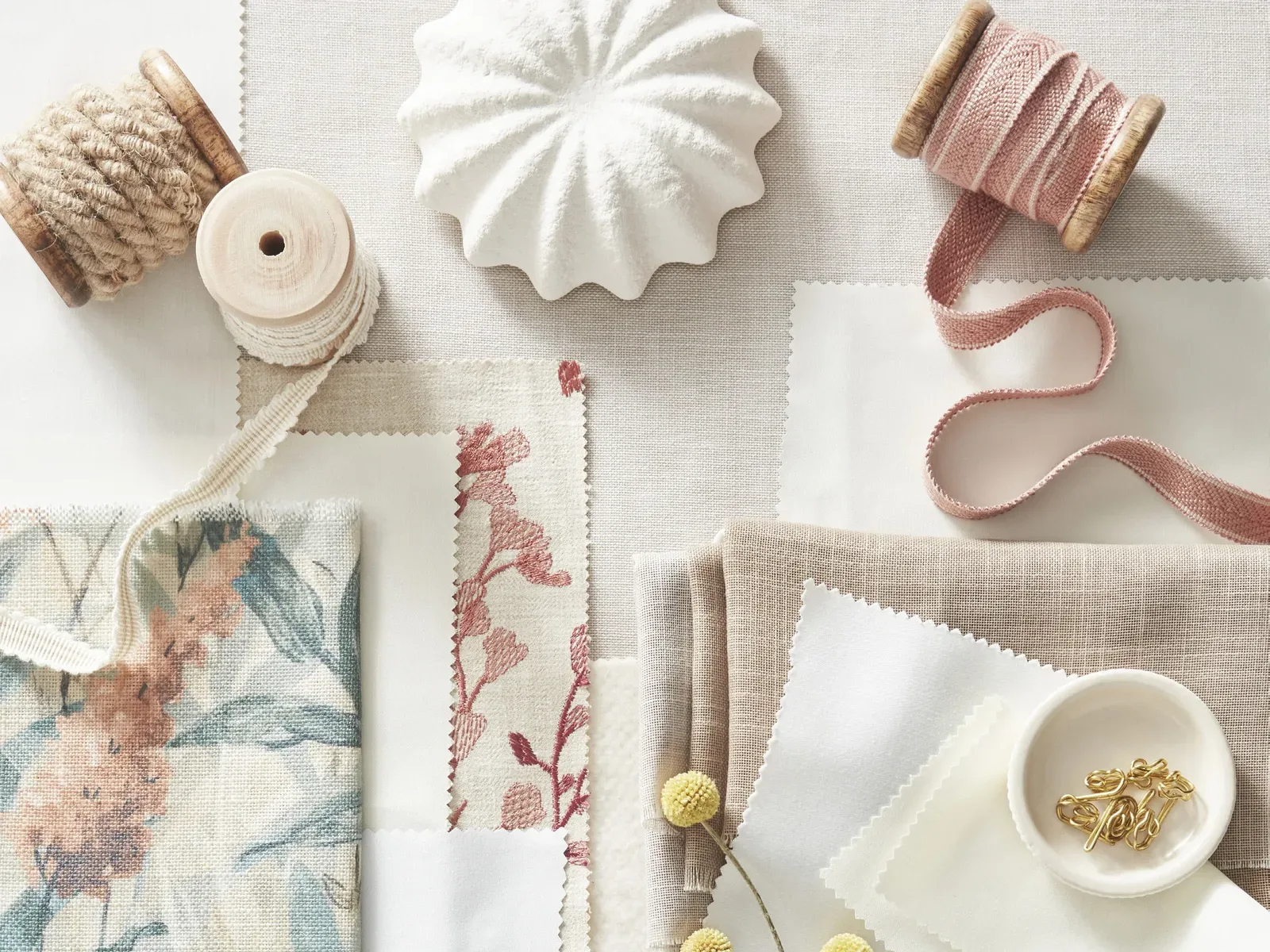
The lining is the part of a curtain nobody sees, but it’s doing most of the practical work — protecting the fabric, improving how the curtain hangs, and controlling light and heat. Choosing the right one makes a bigger difference than most people expect.
Standard cotton sateen lining
The default lining for most curtains. It gives the curtain fabric body and a smooth, even drape, protects it from sun-fading and dust from behind, and helps block a moderate amount of light. If your main fabric is a pattern or a lighter colour you want to protect, this is the baseline you’d choose unless you have a specific need for blackout or thermal performance.
Blackout lining
A blackout lining has an additional coating (or multiple passes of coating — you’ll see linings described as “1 pass”, “2 pass” or “3 pass”, referring to how many coats are applied) that blocks the vast majority of light coming through the fabric. More passes mean more complete blackout, at the cost of a slightly stiffer handle. This is the right choice for bedrooms, nurseries, and media rooms.
Thermal lining
Thermal linings are woven or coated to reduce heat transfer through the window, keeping rooms warmer in winter and helping to keep them cooler in summer, as well as cutting down on outside noise. Many blackout linings are also thermal, so you can often get both benefits in a single product — worth asking about if energy efficiency and light control both matter to you.
Interlining
Interlining is a soft, thick layer sandwiched between the main fabric and the lining, rather than a lining in its own right. It gives curtains real weight and a luxurious, structured fall, adds a further layer of insulation, and helps disguise any slight imperfections in lighter-weight fabrics. It’s the detail that separates a curtain that hangs beautifully from one that just hangs. Interlined curtains cost more, both in fabric and the additional labour to make them, but the difference in how they drape is noticeable.
Which should you choose?
- Living room or dining room: standard or thermal lining, depending on how much you want to reduce heat loss and noise.
- Bedroom or nursery: blackout lining, ideally with interlining for warmth and a fuller look.
- Period property or a statement window: interlining, for the weight and drape that suits a more traditional, generously proportioned curtain.
- Home office or media room: blackout and thermal combined, to control both light and outside noise.
We can talk you through swatches of each lining type at your consultation, so you can feel the difference in weight and opacity before deciding — it’s hard to judge from a description alone. If your room gets strong direct sun, our guide to south-facing rooms covers how lining also helps protect fabric from fade.
See our curtains range for more.
Ready to talk through your windows?
Book a free design consultation and we’ll help you choose the right made-to-measure blinds, curtains or shutters for your home.
Get in touch