
Guide · 5 min read
Venetian Blinds Buying Guide: Wood, Faux Wood or Aluminium?
Comparing real wood, faux wood and aluminium Venetian blinds on look, cost, moisture resistance and the rooms each suits best.
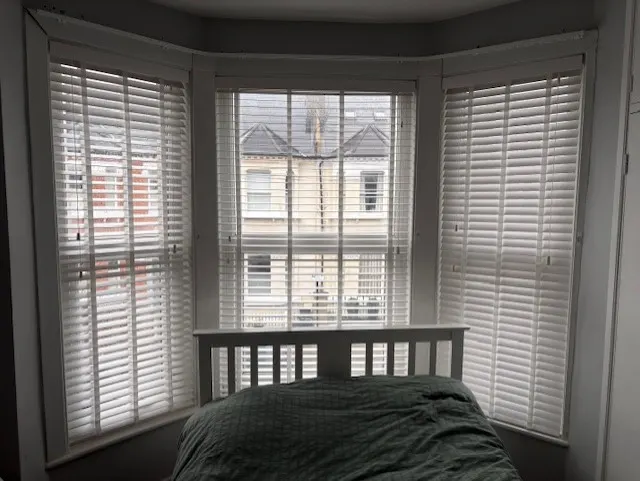
Venetian blinds are one of the most adjustable window treatments available — tilt the slats to any angle for precise light control, or raise them fully out of the way. The main decision is which slat material suits your room.
Real wood
Real wood Venetian blinds bring genuine warmth and grain variation that no synthetic material quite matches, and they’re a natural fit for living rooms, studies, and bedrooms with a traditional or Scandinavian-inspired look. The trade-off is that real wood is more sensitive to humidity and temperature swings than the alternatives, so it’s best avoided in bathrooms, kitchens, or anywhere with high moisture.
Faux wood
Faux wood slats — typically a PVC or composite material finished to look like painted or stained wood — give you a very similar appearance to real wood at a lower cost, and crucially, they’re far more resistant to humidity, making them a practical choice for kitchens and bathrooms where real wood wouldn’t hold up. They’re also slightly heavier than real wood, so larger faux wood blinds may need reinforced brackets — something we’ll always account for when we measure.
Aluminium
Aluminium Venetian blinds are the lightest and slimmest of the three, with slats as narrow as 16mm available, giving a clean, minimal, contemporary look. They come in the widest range of colours and finishes — including metallics — and hold up well in any room, including bathrooms and kitchens. The trade-off is a colder, more industrial look compared with wood or faux wood, and slats can dent if knocked, unlike the more forgiving wood alternatives.
Slat width
Venetian blinds commonly come in 25mm, 35mm and 50mm slat widths (aluminium can go narrower still). Narrower slats give a more delicate, detailed look and suit smaller windows; wider slats give a bolder look and let more light through per open slat, which can suit larger windows and more contemporary interiors.
Quick comparison
- Best natural look: real wood.
- Best value with a wood look: faux wood.
- Best for bathrooms and kitchens: faux wood or aluminium.
- Best minimal, contemporary look: aluminium, especially narrow-slat options.
- Best for larger or heavier drops: faux wood or aluminium, both handle scale better than real wood.
Whichever material you’re drawn to, we’d recommend seeing and handling a real sample before deciding — colour and grain can look quite different in person than in a photo, and it’s the easiest way to settle between real and faux wood side by side. Faux wood and aluminium are also two of our top picks for kitchens and bathrooms, where moisture resistance matters.
See our blinds & shutters range for more.
Ready to talk through your windows?
Book a free design consultation and we’ll help you choose the right made-to-measure blinds, curtains or shutters for your home.
Get in touch